

No Dental Insurance in St. Louis? No Problem. Here's What You Should Know About KFD's Membership Plan

This article is for informational purposes only and does not constitute dental, medical, financial, or insurance advice. Please consult a qualified dental professional for guidance specific to your situation.
There's a common experience shared by millions of Americans that rarely gets talked about out loud: sitting with a toothache or a nagging concern about a chipped tooth, knowing a dental visit would help — and quietly deciding to wait. Not because the discomfort isn't real, but because the financial uncertainty of going to the dentist without insurance can feel like a barrier too significant to clear.
If you live in the St. Louis area and don't have dental insurance, you're in good company. Roughly 68 million Americans lack dental coverage, and for many of them, the absence of insurance doesn't reflect indifference toward their health — it reflects the complicated, often impractical reality of how dental coverage works in this country. Premiums that don't justify the benefits. Waiting periods that delay care when care is needed. Annual maximums that evaporate after one significant procedure.
The goal of this article is straightforward: to walk you through what's actually available to uninsured dental patients in the St. Louis area, explain how in-practice membership plans work, and help you make informed decisions about your care — regardless of what your insurance card says, or doesn't say.
Why So Many St. Louis Residents Go Without Dental Insurance
The assumption that people without dental insurance simply haven't looked into it doesn't hold up to much scrutiny. The more common reality is that coverage options are genuinely limited, or the cost-benefit math doesn't work in the patient's favor — and a thoughtful person has already run the numbers.
Consider the range of people in the St. Louis area navigating dental care without insurance today. Freelancers, independent contractors, and self-employed professionals make up a growing share of the workforce and don't have employer-sponsored benefits to lean on. Small business owners often can't justify the expense for themselves after covering their team. Early retirees — those who've left traditional employment before Medicare eligibility — frequently find themselves in a dental coverage gap that can stretch for years.
Adults transitioning between jobs may go months without coverage, even when their overall financial situation is stable. And a significant number of working adults are technically "covered" by an employer dental plan but find that the annual maximum, waiting periods, and exclusions make it less useful than it appears on paper — particularly in years when dental needs exceed the modest benefit the plan is willing to pay.
There's also a straightforward financial calculation that many people quietly run: if a dental insurance premium costs $40 to $60 per month, that's $480 to $720 annually for an individual. If the plan's annual benefit is capped at $1,000 to $1,500 — and much of that goes toward preventive services a patient could pay for at standard rates — the net financial advantage of having insurance can shrink considerably in lower-utilization years.
For a meaningful portion of St. Louis residents, the honest assessment is that dental insurance, as traditionally structured, wasn't designed with their situation in mind. And for those patients, a different approach to consistent, affordable care makes more sense.
The Hidden Cost of Putting Dental Care on Hold
One of the most important things to understand about oral health is that dental problems rarely stay the same size. A small cavity left unaddressed becomes a larger one. A larger cavity can progress into an infection that requires a root canal and crown. A cracked tooth that would have been a straightforward repair in its early stages can become an extraction and eventual implant if left alone long enough. The trajectory almost always moves toward greater complexity — and greater expense.
This isn't meant to alarm. It's meant to contextualize something that dental professionals observe consistently across their patient populations: the patients who delayed care due to cost concerns often find that the financial logic that seemed sound at the time — avoiding a $200 exam — ultimately resulted in treatment plans measured in thousands of dollars. The short-term avoidance created the very expense it was trying to prevent.
The connection between oral health and overall systemic wellbeing adds further weight to this conversation. Research has long explored links between chronic gum disease and cardiovascular health, blood sugar regulation in diabetic patients, and complications in pregnancy. The mouth isn't isolated from the rest of the body, and untreated dental disease can have downstream effects that extend well beyond the teeth themselves.
What all of these points to is the genuine value of consistent, preventive dental care — not as a luxury, but as a practical health priority. And the good news for uninsured patients in St. Louis is that accessing that consistent care doesn't require traditional insurance.
What Traditional Dental Insurance Actually Covers — and What It Doesn't
Before exploring alternatives, it's worth taking a clear-eyed look at what traditional dental insurance actually provides — because the structure of these plans often surprises people who've used them for years without examining the details closely.
Most traditional dental plans operate on a familiar tiered structure: minimal or no cost for preventive services, partial coverage for basic restorative work, like fillings, and a percentage contribution toward major procedures such as crowns, root canals, or implants. That contribution to major work is typically 50%, which means a $1,600 crown leaves the patient responsible for $800 — after any waiting periods have been satisfied and before the annual deductible is applied.
The annual maximum is perhaps the most misunderstood feature of dental insurance. Most plans cap their total annual benefit at somewhere between $1,000 and $2,000. That sounds workable in the abstract until a patient needs two fillings, a crown, and a root canal in a single calendar year. At that point, the maximum is reached early, and the remaining treatment cost falls entirely on the patient, who has, in the meantime, continued paying monthly premiums.
Waiting periods add another layer of limitation. Many plans impose a six-to-twelve-month waiting period before they'll cover restorative or major procedures at all. This means someone who enrolls in January and needs a crown in March may receive no benefit for that procedure until their waiting period has run out. For patients with immediate care needs, this feature effectively negates one of insurance's primary appeals.
None of this is to suggest that dental insurance is without value. For patients with significant and predictable dental needs — or access to generous employer-sponsored plans — coverage can absolutely provide meaningful financial support. But for patients without employer coverage, or those whose dental needs in a given year are primarily preventive, the economics often tilt toward alternative models that offer more transparency and more predictability.


At Kirkwood Family Dental, we love to bring smiles back to life. Check out more before and after photos of smile makeovers and contact us today learn more about how we can help you improve or maintain your dental health.
What Is a Dental Membership Plan?
A dental membership plan is not insurance. That distinction matters, and it's worth holding onto clearly.
Insurance involves a network of third-party payers, actuarial risk pools, claim submissions, approval processes, and the administrative overhead those systems generate. A dental membership plan, by contrast, is a direct agreement between a patient and their dental practice. The patient pays an annual or monthly fee, and in return receives a defined set of services — typically the preventive foundation of dental care — along with discounts on additional treatments as needed.
Because there's no insurance company in the middle of this arrangement, the practice delivers care without the friction of claim approvals, benefit maximums, or preauthorization requirements. The patient knows exactly what they're receiving. The practice knows exactly what it's providing. The financial relationship is transparent on both sides.
Membership plans vary in structure from practice to practice, but most include some combination of comprehensive exams, routine professional cleanings, and dental x-rays — the core of what preventive dentistry looks like in practice. Many plans also extend a percentage discount on restorative and specialty treatments that fall outside the plan's core inclusions, giving patients a degree of financial predictability even when their care needs go beyond routine maintenance.
It's also important to distinguish dental membership plans from third-party dental discount programs or dental savings cards. Those products function more like access programs than care plans: a patient purchases membership in a network of participating providers who've agreed to charge reduced rates. The quality and continuity of care are entirely variable, and there's no relationship with a specific practice built into the model. A dental membership plan offered directly by a practice is different in a meaningful way — it's rooted in an ongoing patient-provider relationship, which is where the real value of dentistry tends to accumulate over time.
KFD's Membership Plan: What's Included and Who It's For
For St. Louis-area residents looking for a practical, transparent alternative to traditional dental insurance, Kirkwood Family Dental offers a membership plan designed with exactly this patient in mind.
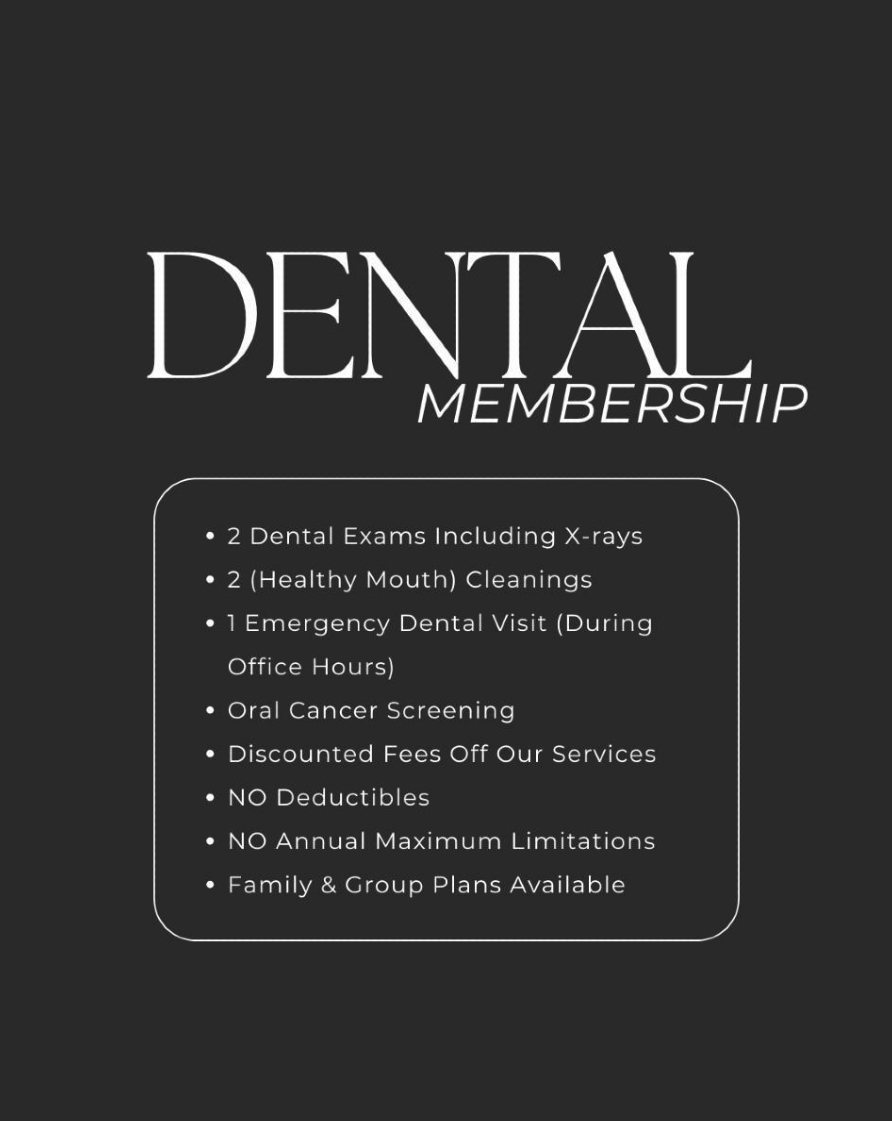
The plan is built around the services that make the most meaningful difference in long-term dental health: two comprehensive exams per year, including x-rays and digital imaging, and two professional cleanings per year to keep the mouth healthy between visits. These aren't supplemental offerings — they are the foundation of a well-maintained smile, and they're delivered with the same thoroughness and care that every patient at the practice receives, regardless of how they're paying.
What distinguishes an in-house membership of this kind from a third-party discount program is the continuity it creates. Enrolling in Kirkwood Family Dental's membership plan isn't purchasing access to a rotating list of unfamiliar providers — it's establishing a dental home. Your provider builds familiarity with your health history, your concerns, and your long-term goals over time. That accumulation of context makes each visit more efficient and each conversation more productive.
For patients who've been putting off care because traditional insurance wasn't accessible or didn't make financial sense, the membership plan offers a clear, predictable pathway to consistent care — without the complexity of a product that wasn't designed for their situation in the first place.

Ready to learn about a membership plan?
Schedule an appointment today to learn how we can help improve the overall health and appearance of your smile.
How a Membership Plan Compares to Other Options for Uninsured Patients
Uninsured dental patients in St. Louis have more options than many realize, and it's worth understanding the landscape before making a decision.
Paying entirely out of pocket is one approach, and for patients with minimal and predictable dental needs in a given year, it can work. The limitation is exposure to cost variability: if an unexpected treatment need arises, there's no structured support to absorb any portion of the expense. Out-of-pocket care also doesn't naturally create the rhythm of preventive visits that catch problems early, since every appointment has a direct and immediate cost associated with it.
Dental schools represent another option available to St. Louis residents. Supervised dental students provide services at reduced rates, and for patients whose primary concern is cost and who have flexibility around scheduling and treatment pace, dental schools can offer real value. The trade-offs involve continuity and time: care is provided by students whose progression through training is variable, appointments can be longer than private practice visits, and wait times for certain procedures can be significant.
Third-party dental discount programs offer access to reduced rates at participating practices. The value depends on whether the participating providers in your area meet your standards for care quality, and the "savings" these programs advertise are measured against an arbitrary standard rate rather than a consistent benchmark. There's no ongoing relationship with a specific provider built into the model.
An in-practice membership plan combines the financial predictability of a structured arrangement with the continuity of a genuine long-term care relationship. For most uninsured patients in the St. Louis area who are looking for consistent, high-quality care at a practice they'd choose independently, it typically provides the best combination of value, transparency, and experience.
Who Benefits Most from a Dental Membership Plan
Dental membership plans serve a wide range of patients effectively, but they tend to be especially well-suited to several specific groups.
Self-employed professionals and freelancers are among the most natural candidates. Without access to employer-sponsored benefits, these individuals bear the full cost of every healthcare expense. A membership plan replaces cost uncertainty with a known annual commitment and ensures that preventive care stays consistent even through the variability of self-employment, when it might otherwise be tempting to deprioritize.
Retirees, particularly those who've left employer coverage behind before Medicare eligibility, often find membership plans to be an ideal bridge. Medicare does not cover routine dental care, and the gap between leaving employer benefits and accessing Medicare can span several years. A membership plan fills that window reliably and without requiring enrollment in a traditional insurance product.
Adults in job or career transitions may go months without dental coverage even when their broader financial picture is stable. A membership plan provides continuity of care during those in-between periods, without requiring a long-term commitment to a specific insurance product.
Families with children whose dental needs are relatively predictable and primarily preventive also stand to benefit. Knowing that exams and cleanings are covered for the year simplifies family healthcare budgeting in a meaningful way and keeps children connected to consistent care during the years when establishing good habits matters most.
And there are patients who technically have dental insurance but find it insufficient — plans with low annual maximums, extended waiting periods, or significant exclusions. For these patients, a membership plan through a trusted practice can function as a complement to inadequate coverage or as a more practical alternative altogether.
Looking for affordable dental plans in St. Louis?
We are excited to offer a membership plan for those patients who want to make Kirkwood Family Dental their home for dental care.
Preventive Care as a Financial Strategy
One of the most useful reframes available to patients managing dental costs without insurance is this: preventive dental care is not primarily an expense — it's a financial strategy.
Two professional cleanings and two comprehensive exams per year accomplish something that's straightforward to understand in retrospect: they catch problems when they're still small and inexpensive to address. Monitoring early gum disease with routine care costs a fraction of managing advanced periodontal disease that has begun to compromise the bone and tissue supporting the teeth. Identifying a hairline crack during a routine exam costs a fraction of addressing a fractured tooth that has gone unmonitored for two additional years. Prevention doesn't just protect health — it consistently protects the budget.
The math consistently favors staying current on preventive visits. And staying current on preventive visits is exactly what a membership plan is structured to support.
For patients in the St. Louis area who have been putting off dental care because the cost felt unpredictable or because the insurance situation felt too complicated to sort out, the membership model offers a meaningful reset. It replaces the anxiety of uncertain bills with a defined annual commitment. It replaces the one-time barrier of a large, unexpected charge with a manageable investment in the kind of proactive care that prevents those charges from accumulating in the first place.
Perhaps most importantly, it keeps patients connected to a care team that builds genuine familiarity with their dental history, anticipates their individual needs, and is positioned to intervene early — when early intervention is still an option.
That's not just good dentistry. For patients navigating oral health without the cushion of traditional insurance, it's good financial planning.


At Kirkwood Family Dental, our expert team uses the latest techniques to transform your smile. See more before and after photos of smile makeovers. Contact us today to learn how we can help you experience a transformation firsthand.
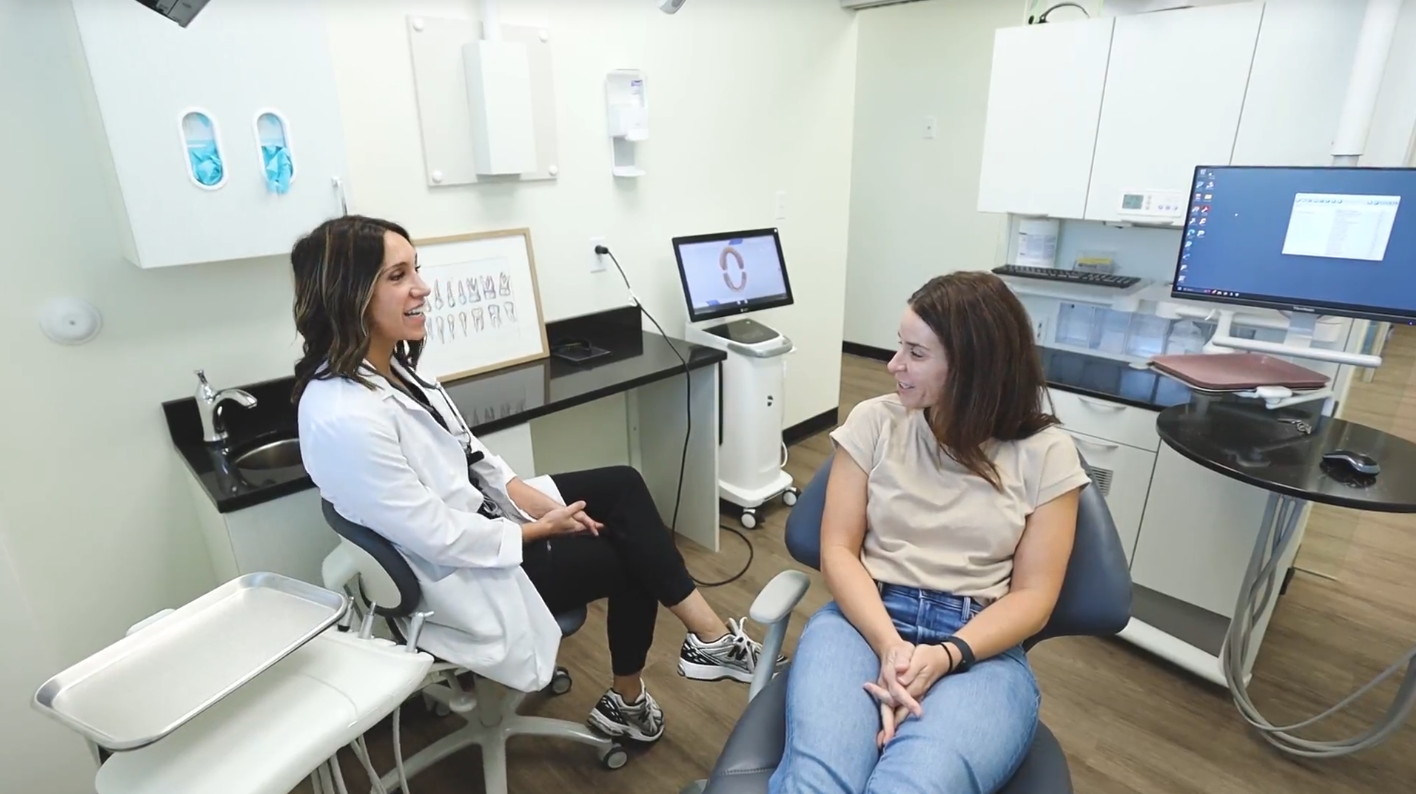
Ready to learn about a membership plan?
Contact our office today to schedule a no-pressure exam. We can’t wait to meet you!

FAQ’s - Dental Membership Plan
Is a dental membership plan the same as dental insurance?
No — and the distinction matters. A dental membership plan is a direct agreement between you and your dental practice. There's no third-party insurance company involved, no claims process, and no annual benefit maximum. You pay an annual or monthly fee and receive a defined set of preventive services along with discounts on additional care. The absence of an insurance intermediary makes the arrangement simpler and more transparent.
What preventive services are typically included in a dental membership plan?
Most in-practice membership plans center on comprehensive exams, professional cleanings, and dental x-rays. KFD's membership plan specifically includes two comprehensive exams with x-rays and digital imaging per year, along with two professional cleanings. Because plans vary by practice, confirm the specific inclusions with your provider before enrolling.
Can I use a membership plan for major procedures like crowns or implants?
Membership plans are primarily structured around preventive care. However, many practices extend member discounts on restorative and specialty treatments beyond the plan's core coverage. If you anticipate needing significant restorative work, ask your dental team how the membership discount applies and request a cost estimate before treatment begins.
Are dental membership plans available for families, or only for individuals?
Many practices offer household or family membership options that extend benefits to multiple members under a unified enrollment structure. Ask your dental provider directly about family pricing and how it's structured, particularly if you have children or a spouse also in need of consistent care.
How is a membership plan different from a dental discount card or dental savings program?
Dental discount cards give you access to a network of participating providers who've agreed to charge reduced rates, with no continuity of care built in. A membership plan offered directly through your dental practice is different — it supports ongoing care within a practice you've already chosen, with a provider who knows your dental history.
Are there waiting periods before I can use my membership benefits?
Unlike most traditional dental insurance plans, in-practice membership plans typically do not impose waiting periods. You enroll and your benefits are generally available right away — which is one of the most practical advantages of the membership model for patients who need care now.
What if I need dental care that goes beyond what the membership plan covers?
For treatments beyond the preventive scope — fillings, crowns, periodontal therapy, and other restorative work — you would pay the practice's standard fee, often with a member discount applied. Your dental team will provide a clear treatment plan and cost estimate before any work begins.
Is a dental membership plan worth it if I already have some form of dental coverage?
It depends on the quality of your existing coverage. If your current plan carries a low annual maximum, long waiting periods, or significant exclusions, a membership plan through your dental practice may offer more practical value for your day-to-day preventive needs. A conversation with your dental team about whether your current coverage is genuinely serving you is a worthwhile starting point.
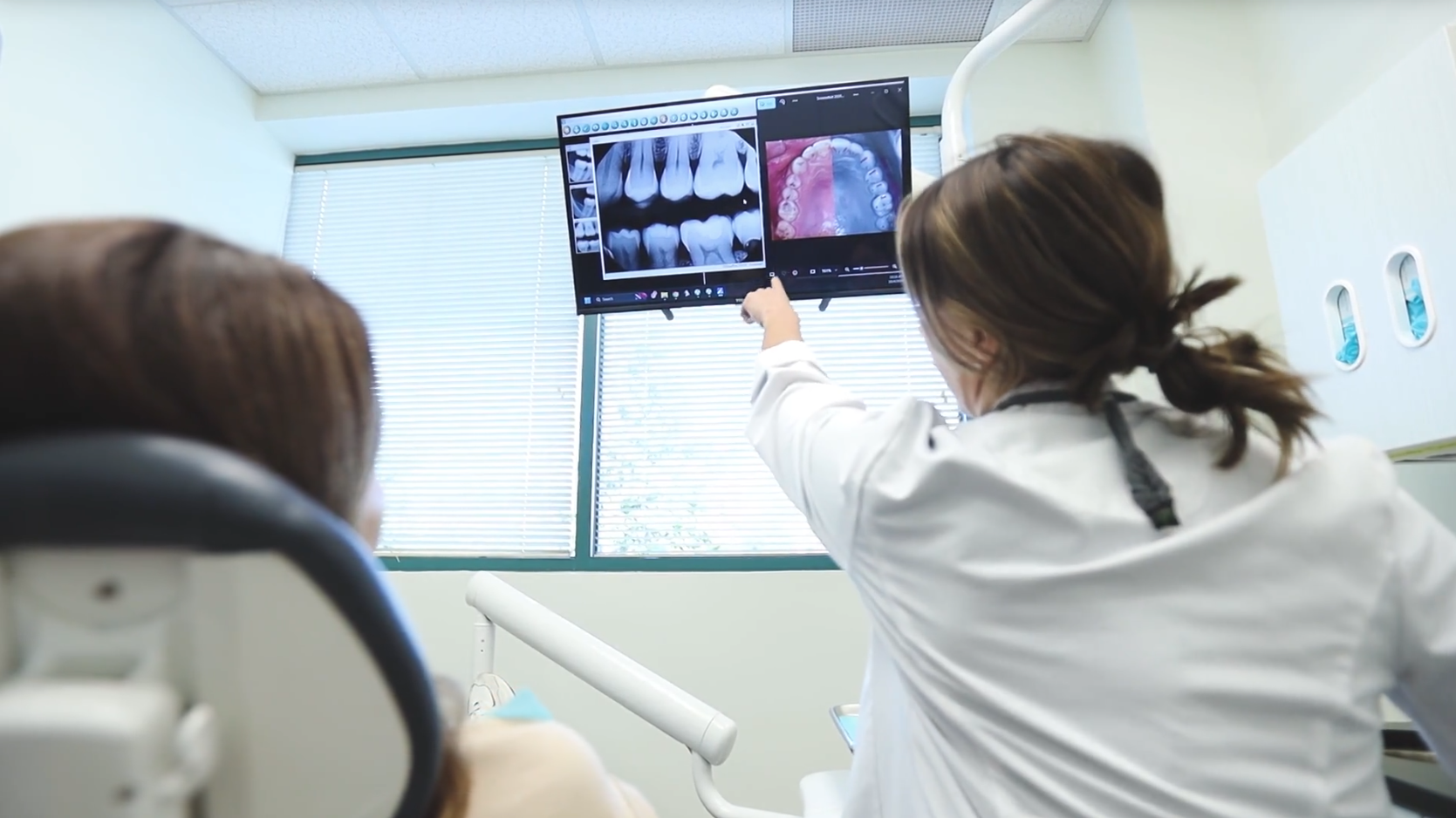
Work with the best dentists in St. Louis
Contact us today to schedule a comprehensive dental exam. We can’t wait to meet you!
Disclaimer
The information provided in this article is intended for general educational purposes only and does not constitute dental, medical, financial, or insurance advice. Membership plan details, pricing, and included services vary by dental practice and are subject to change. Cost figures referenced throughout this article represent general ranges and may not reflect current pricing in all markets or for all practices. Readers are encouraged to contact their dental provider directly for specific, current information about membership options and to consult with qualified healthcare and financial professionals regarding their individual circumstances. This article is not intended to be a substitute for professional dental consultation, diagnosis, or treatment
