

Do Clear Aligners Work? What Patients Actually Need to Know
Please note: Dental treatment recommendations can vary significantly based on geographic location, individual needs, and specific dental practices. Always consult with a qualified dental professional for personalized advice regarding your specific oral health needs.
If you've been wondering whether clear aligners actually work — or whether the results you've seen advertised reflect what most patients experience — you're asking exactly the right question. Clear aligners have become one of the most widely discussed orthodontic options of the past two decades, and the conversation surrounding them isn't always clear or balanced. Between the advertising, the rapid growth of mail-order aligner companies, and a wide range of patient experiences, it can be genuinely difficult to know what to believe.
The honest answer is: yes, clear aligners work, but with important conditions attached. They are a clinically sound, evidence-supported treatment for many alignment issues, and they have helped a significant number of people achieve straighter, healthier smiles. They are also not the right solution for everyone. Effectiveness depends on the complexity of your case, the quality of professional oversight, and — perhaps more than any other single factor — your own consistency in wearing them as prescribed.
This guide is designed to give you a grounded, complete picture of what clear aligners can and cannot accomplish, how the treatment functions, and what separates outcomes that meet expectations from those that fall short. By the time you finish reading, you'll have the information you need to have a productive conversation with your dental provider about whether this path is right for you.
How Clear Aligners Work: The Mechanics Behind the Movement
Clear aligners straighten teeth using the same fundamental principle as traditional braces: controlled, consistent pressure applied over time. What differs is how that pressure is delivered.
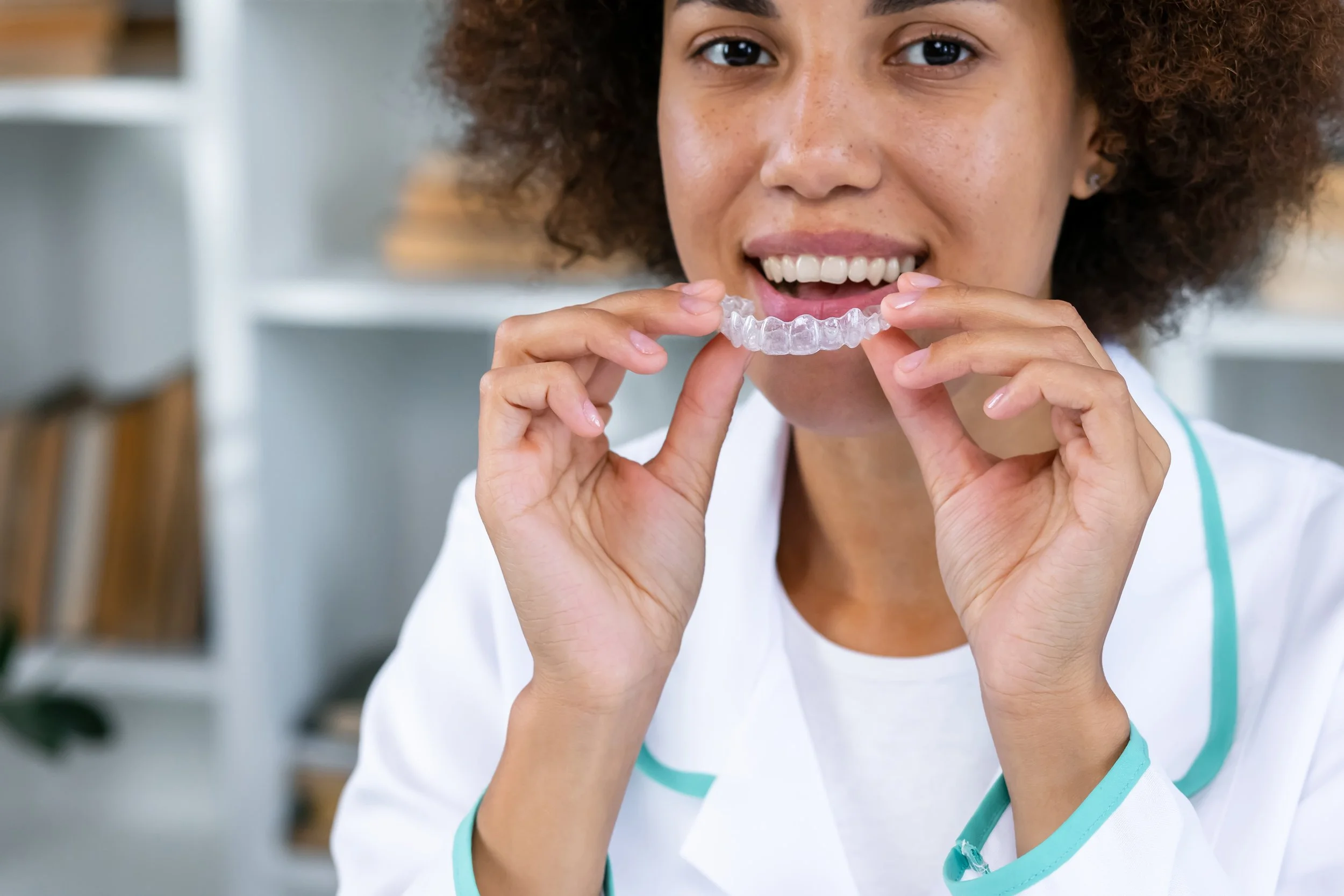
Rather than brackets and wires, clear aligners use a series of custom-fitted plastic trays — each one slightly different from the last — to move teeth incrementally toward their intended positions. You wear each tray for one to two weeks before progressing to the next in the series. Each new tray represents a small, planned step forward, and the cumulative effect of those steps produces the final result.
Treatment plans are designed using digital imaging and 3D modeling software that maps tooth movement from your current position to the intended outcome. This planning process allows your provider to visualize the entire treatment arc before a single tray is fabricated, supporting more precise planning and better-informed conversations about what to expect.
Many cases also require small tooth-colored attachments — sometimes called buttons — bonded directly to specific teeth. These help the aligner trays grip teeth that require more complex movement, such as rotation or vertical repositioning, and meaningfully expand what aligners can accomplish.
The biology driving tooth movement is the same regardless of orthodontic method. Sustained pressure against a tooth triggers a gradual remodeling process in the surrounding bone and periodontal ligaments, allowing teeth to shift while maintaining structural integrity. This process takes time — and it requires consistent, sustained pressure to proceed as planned.
What Clear Aligners Are Genuinely Good At
Clear aligners have a well-documented track record for a meaningful range of orthodontic conditions. When the case is appropriate, and treatment is properly supervised, outcomes are consistently strong.
Mild to moderate crowding is one of the clearest areas of success. When teeth overlap, are slightly rotated, or are simply positioned too close together, clear aligners can create proper spacing with predictable results. Spacing issues — gaps between teeth — respond equally well, with aligners gradually closing spaces over the course of treatment.
Certain bite irregularities also fall within the effective range of aligner treatment. Mild to moderate overbites have become increasingly addressable with aligners as the technology has evolved. Underbites and crossbites can be treated in many cases as well, though the more pronounced the discrepancy, the more complex the treatment becomes — and the more critical professional oversight is to a successful result.
It's worth noting that the scope of what clear aligners can treat has expanded considerably over the years. Earlier aligner systems had more limited clinical applications. Contemporary systems, in experienced hands, can address cases that would previously have required traditional braces exclusively. Capability varies depending on the specific system, provider experience, and individual patient anatomy — which is why an in-person evaluation remains essential before any treatment decision.
For adults who did not pursue orthodontic treatment earlier in life, clear aligners have opened a meaningful door. The ability to address alignment issues without the visibility of metal brackets has made treatment more accessible to patients who might otherwise have continued living with concerns they were reluctant to address.
Where Clear Aligners Have Real Limits
An accurate picture of clear aligner treatment includes an honest acknowledgment of where the technology is not the right tool. Not every orthodontic problem is a clear aligner problem, and understanding those limits is important before committing to a treatment plan.
Severe crowding or malocclusion — significant misalignment of the bite — frequently exceeds what aligners can reliably correct. Cases involving meaningful skeletal discrepancies, where the underlying jaw structure is the source of the problem rather than tooth position alone, typically require a different approach. Traditional braces, and in some cases orthognathic surgery, are better suited to these situations.
Large vertical tooth movements — significantly elongating or intruding a tooth — also fall outside the reliable range of aligner treatment for most patients. Severely rotated teeth can be difficult to move predictably with aligners alone, though attachments have expanded what's possible in this category.
There are also dental health prerequisites that must be met before orthodontic treatment of any kind can begin. Active gum disease, significant bone loss, or untreated decay are disqualifying conditions — not because aligners cause these problems, but because moving teeth through a compromised oral environment creates risk rather than improvement. These concerns need to be resolved before orthodontic treatment is appropriate.
Age and dental development matter as well. Clear aligners are generally not well-suited for younger children whose teeth are still erupting and whose jaw structure is still developing. They are most effective in teenagers and adults with a complete — or nearly complete — permanent dentition.
In-Office vs. Direct-to-Consumer: A Distinction That Matters
Any current discussion of clear aligners needs to address the direct-to-consumer (DTC) aligner market. Mail-order aligner companies have made at-home treatment more widely available, often presenting it as a convenient, lower-cost alternative to in-office care. Understanding what differs between each approach — and what's at stake — is worth your attention.
DTC aligners typically involve a patient taking impressions at home or visiting a scanning kiosk, receiving aligners by mail, and completing treatment with no in-person dental oversight. There are no radiographs, no clinical examination of gum health or bone levels, and no professional monitoring of how teeth are responding during treatment.
This matters for several concrete reasons. Without a comprehensive examination and X-rays, it is not possible to know whether orthodontic treatment is safe for a given patient at a given moment. Bone loss, root abnormalities, and periodontal disease don't present visibly — they require professional evaluation to detect. Moving teeth without identifying and addressing these conditions can cause lasting harm to structures that are difficult or impossible to restore.
Teeth also don't always move exactly as planned. When something unexpected occurs during treatment — a tooth not tracking properly, unanticipated changes in gum tissue, or discomfort that signals a problem — a provider who can clinically examine you is essential to correcting course before a minor deviation becomes a significant complication.
In-office clear aligner treatment, by contrast, begins with a thorough clinical evaluation, continues with professional monitoring throughout, and includes the capacity to make meaningful adjustments when needed. It also typically makes use of a broader range of clinical tools — attachments, elastics, and refinement trays — that expand both the range of treatable cases and the precision of results.
Dental practices that offer clear aligners as part of a comprehensive approach to care — like the team at Kirkwood Family Dental — are positioned to evaluate candidacy thoroughly, monitor treatment with clinical precision, and support patients through any challenges that arise. That continuity of oversight contributes directly to outcomes.
The cost difference between DTC and in-office treatment is real and worth acknowledging. But lower upfront cost carries limitations and risks that affect both the safety of the process and the quality of the result — factors that deserve weight in any honest comparison.


At Kirkwood Family Dental, we love to bring smiles back to life. Check out more before and after photos of smile makeovers and contact us today learn more about how we can help you improve or maintain your dental health.
The Compliance Factor: The Variable That Matters Most
If there is one aspect of clear aligner treatment that deserves more attention than it typically receives, it is this: aligners only work when they are in your mouth. This sounds self-evident, but its implications are significant. Clear aligners are designed to be worn 20 to 22 hours per day — every day — for the full duration of treatment. That leaves a narrow window of two to four hours for eating, drinking anything other than water, and oral hygiene.
When aligners are not worn consistently, teeth don't move according to plan. The carefully sequenced progression from one tray to the next depends on each tray completing its assigned tooth movement before the next one begins. When daily wear falls short, teeth don't reach their target positions, and subsequent trays may not fit properly. At best, this extends treatment time. At worst, it compromises the final outcome in ways that require refinement trays — additional aligners designed to correct for deviations — to address.
This represents a meaningful distinction from traditional braces. Fixed appliances apply pressure continuously because they cannot be removed, so there is no daily choice involved. Aligners require sustained personal commitment, maintained not for a day or a week, but for the full length of treatment, which may span a year or more.
This is not meant to discourage anyone from pursuing aligner treatment. It is information worth having before you begin, so you can make an honest assessment of whether the format fits your lifestyle. Patients who wear their aligners faithfully, switch trays on schedule, and attend monitoring appointments as planned tend to achieve their intended outcomes. Patients who wear them inconsistently tend to be disappointed, and understanding why helps you take the steps needed to avoid that outcome.
Ready to learn about clear aligners?
Schedule an appointment today to learn how we can help improve the overall health and appearance of your smile.
What to Expect: Timelines, Progress, and What Results Look Like
Clear aligner treatment timelines vary considerably depending on case complexity and patient compliance. Straightforward cases involving minor crowding or spacing can sometimes be completed in approximately six months. More involved cases — moderate crowding, bite correction, or more significant repositioning — typically require twelve to eighteen months. Complex cases may require longer treatment, sometimes supplemented by refinement trays after the initial series is complete.
Progress during treatment tends to be gradual and cumulative. Movement from one tray to the next is intentionally small, which means day-to-day change is rarely visible. What typically happens is that patients don't notice significant change week to week, and then at some point — often when looking back at early photos — the improvement is striking. That measured pace is by design; it's what allows teeth to move safely through the surrounding bone and tissue without compromising root integrity.
Some discomfort, particularly in the first day or two after switching to a new tray, is common — a predictable response to the pressure of the new aligner beginning to move teeth. It generally resolves quickly. Persistent or pronounced discomfort is worth raising with your provider.
Monitoring appointments serve a function beyond routine check-ins. Your provider is comparing how your teeth are actually tracking against what the digital treatment plan projected — a clinical assessment that allows for early identification of any deviations. This is one of the clearest ways professional oversight during treatment adds value beyond the initial evaluation.
The Retention Phase: Why Treatment Doesn't End With the Last Tray
One of the most important — and most frequently underestimated — aspects of clear aligner treatment is what happens after the active phase concludes. When you complete your final aligner tray, your teeth are in their new positions. What they are not yet, at that point, is stable enough to stay there on their own.
Teeth have a natural tendency to drift back toward their original positions, particularly in the months immediately following orthodontic treatment. This is not unique to clear aligners. It is a characteristic of all orthodontic treatment. The solution is retention: a sustained commitment to wearing retainers to hold teeth in their corrected positions while the surrounding bone and tissue fully adapt.
Retainers come in different forms. Removable retainers resemble clear aligner trays and are typically worn full-time initially, with wear time gradually reduced as bone remodeling stabilizes. Fixed retainers consist of a thin wire bonded to the back surfaces of the front teeth, providing continuous retention without required daily action. Many patients use a combination of both. Your provider will recommend the appropriate approach based on your case.
The transition from active treatment to retention is not the end of your commitment — it is the continuation of it in a different form. Patients who follow their retention protocol protect their results over the long term. Those who discontinue retainer wear, even gradually, often experience unwanted tooth movement. Retention is what transforms your result from a temporary change into a lasting one.
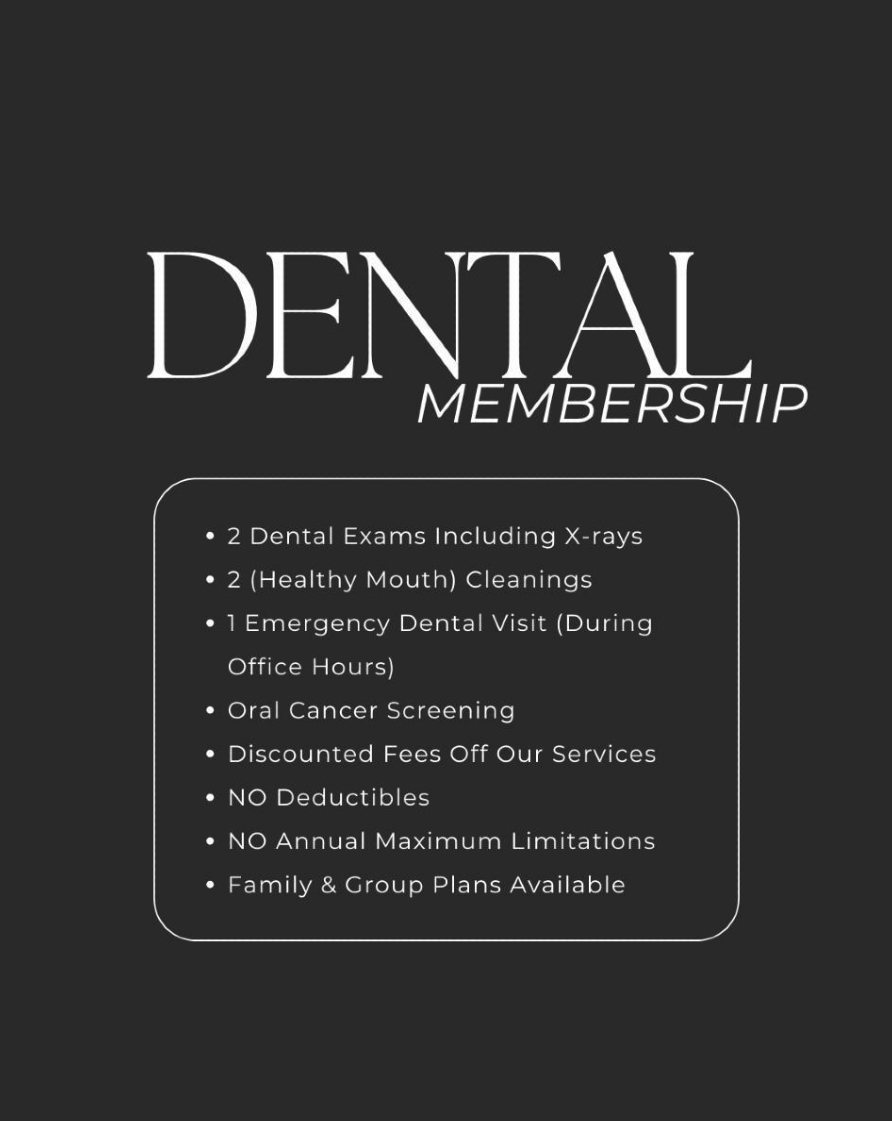
Looking for affordable dental plans in St. Louis?
We are excited to offer a membership plan for those patients who want to make Kirkwood Family Dental their home for dental care.
Are You a Good Candidate? How to Think About It
Not everyone is well-suited to clear aligner treatment, and identifying good candidacy is one of the primary purposes of a professional evaluation. The assessment involves more than a visual look at your teeth. It includes radiographs, an examination of gum and bone health, a bite analysis, and a conversation about your goals and lifestyle.
In general terms, adults and older teenagers with a full complement of permanent teeth, healthy gums, and no active decay tend to be the strongest candidates. Mild to moderate crowding, spacing, and certain bite irregularities typically respond well. Equally important is a realistic understanding of what treatment involves: consistent daily wear, regular monitoring appointments, and a long-term commitment to retention.
Patients with active periodontal disease, significant bone loss, or severe bite discrepancies may need to address other concerns before orthodontics is appropriate, or may find a different orthodontic approach serves them better. Patients who know themselves to be inconsistent with daily habits may want to weigh that honestly before choosing a removable appliance over a fixed one.
The most reliable path to understanding your candidacy is a thorough in-person evaluation with a provider who will give you a straightforward assessment, not just of what you hope to achieve, but of what your oral health status makes possible and appropriate.
A Well-Informed Decision Is the Best Starting Point
Clear aligners are a clinically sound, established orthodontic treatment that produces reliable results for appropriate cases under proper professional guidance. They are not a universal solution, and they require consistent effort, but for patients who are genuinely good candidates and committed to the process, they offer an effective path to a straighter, healthier smile.
The foundation of a successful outcome is laid before treatment begins: in an honest evaluation of candidacy, a thorough understanding of what the process requires, and a trusted relationship with a provider who will support you throughout. That combination — clinical precision, realistic expectations, and consistent follow-through — is what makes clear aligners work.


At Kirkwood Family Dental, our expert team uses the latest techniques to transform your smile. See more before and after photos of smile makeovers. Contact us today to learn how we can help you experience a transformation firsthand.
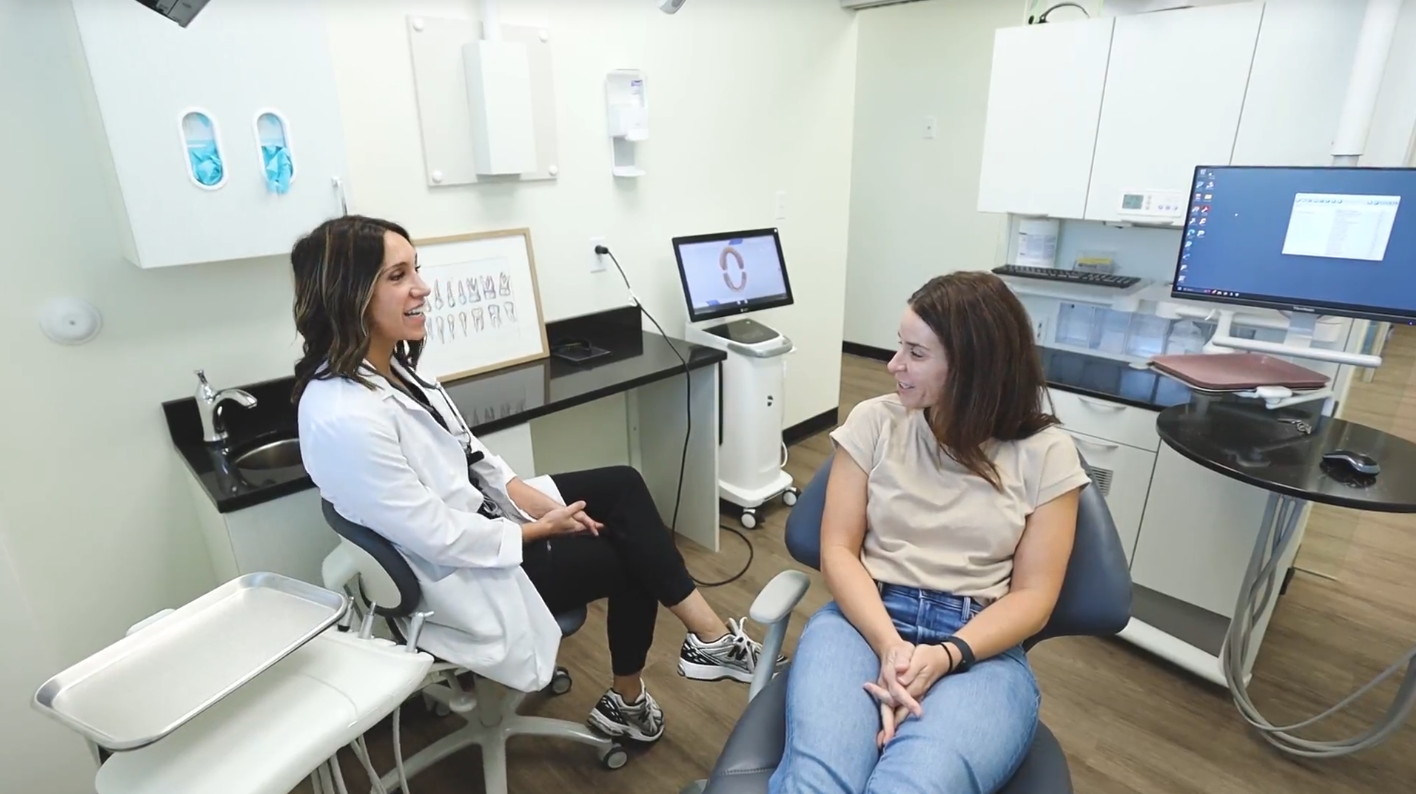
Ready to upgrade your smile?
Contact our office today to schedule a no-pressure exam. We can’t wait to meet you!

FAQs: Clear Aligners
How long does clear aligner treatment typically take? Treatment length depends on the complexity of your case and how consistently you wear your aligners. Simple cases may be completed in around six months; moderate cases typically range from twelve to eighteen months. Your provider will give you a more specific timeline after a thorough evaluation.
Do clear aligners hurt? Mild discomfort is common, particularly in the first one to two days after switching to a new tray. Most patients describe it as a sensation of pressure rather than pain. Over-the-counter pain relievers are generally adequate if needed, and the discomfort typically passes quickly.
Can I eat and drink normally during treatment? Yes — aligners are removed for eating and for drinking anything other than water, so there are no dietary restrictions. You will need to brush and floss before reinserting your aligners to avoid trapping food or bacteria against your teeth.
Are clear aligners as effective as traditional braces? For the cases they are designed to treat, clear aligners can achieve outcomes comparable to braces. Traditional braces have a broader range of clinical applications and may be more appropriate for complex cases. Your dentist can help determine which approach better suits your specific situation.
What should I do if I lose or damage a tray? Contact your provider promptly. Depending on where you are in your treatment sequence, they may advise wearing your previous tray, moving to the next one, or ordering a replacement. Avoid going without an aligner for an extended period, as teeth can shift.
How long will I need to wear retainers after treatment? Retainer wear is typically most intensive immediately after treatment and decreases over time. Many patients transition to wearing retainers only at night on a long-term basis. Stopping retainer wear entirely increases the risk of teeth shifting back. Retention is a long-term commitment, not a temporary measure.
Can clear aligners fix my overbite? Many mild to moderate overbites can be addressed with clear aligners, sometimes with the help of attachments or elastics. Whether your specific overbite falls within the treatable range depends on its severity and underlying cause — a clinical evaluation will provide a clear answer.
What is the difference between getting aligners from a dentist versus a direct-to-consumer company? In-office treatment includes a comprehensive clinical examination, radiographs, professional monitoring, and the ability to make adjustments as needed. Direct-to-consumer aligners involve no in-person dental oversight, which limits their applicability and introduces risk for patients with underlying dental health considerations. Professional supervision contributes meaningfully to both the safety and success of treatment.
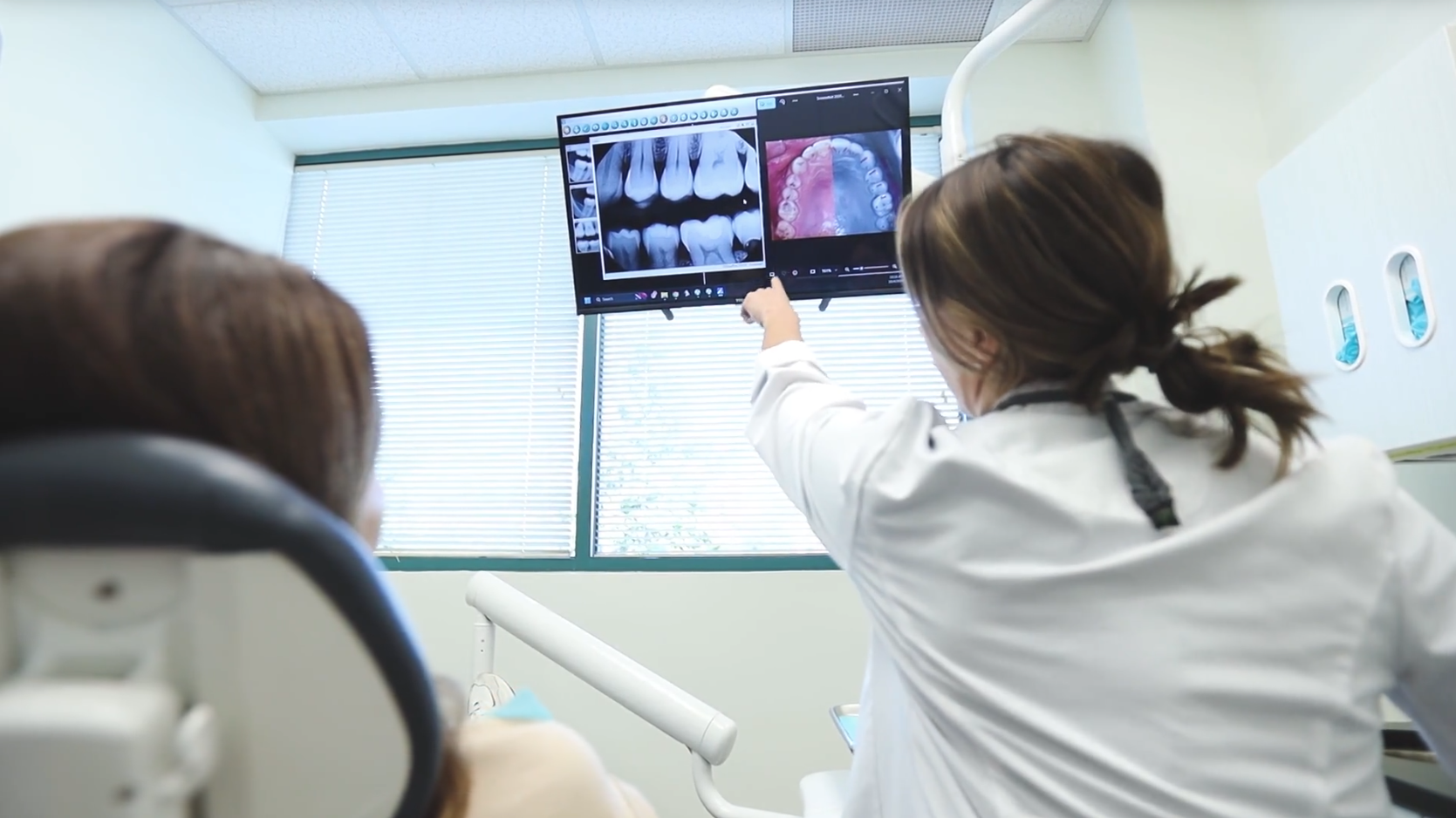
Work with the best dentists in St. Louis
Contact us today to schedule a comprehensive dental exam. We can’t wait to meet you!
Disclaimer
The information in this article is provided for general educational purposes only and does not constitute dental or medical advice. Clear aligner costs, treatment timelines, and clinical recommendations vary based on individual patient needs, case complexity, geographic location, and the specific practices and aligner systems involved. The price ranges cited are general estimates for the St. Louis metropolitan area and should not be interpreted as quotes or guarantees. Insurance coverage, benefit maximums, and financing terms vary by plan and provider and are subject to change. Always consult with a licensed dental or orthodontic professional for an evaluation and personalized treatment recommendation before beginning any orthodontic treatment.
